How to Tell If Shilajit Is Real: 9 Ways to Identify Fake vs. Authentic Shilajit
Your Shilajit dissolves in warm water. It softens in your hand. It gets hard when it's cold.
Does that prove your Shilajit is real?
No.
These popular home tests can tell you something about the physical characteristics of a Shilajit resin, and they may help reveal obvious adulteration. But none of them, by themselves, can prove that a product is authentic, properly purified, or safe to consume.
A convincing imitation can look dark, become sticky when warm, and dissolve in water.
That's why determining whether Shilajit is real requires looking beyond a single viral "purity test."
You need to look at the entire picture: origin, appearance, texture, solubility, smell, taste, processing method, composition, and independent laboratory testing.
This guide explains how.
Quick Guide: Real vs. Fake Shilajit
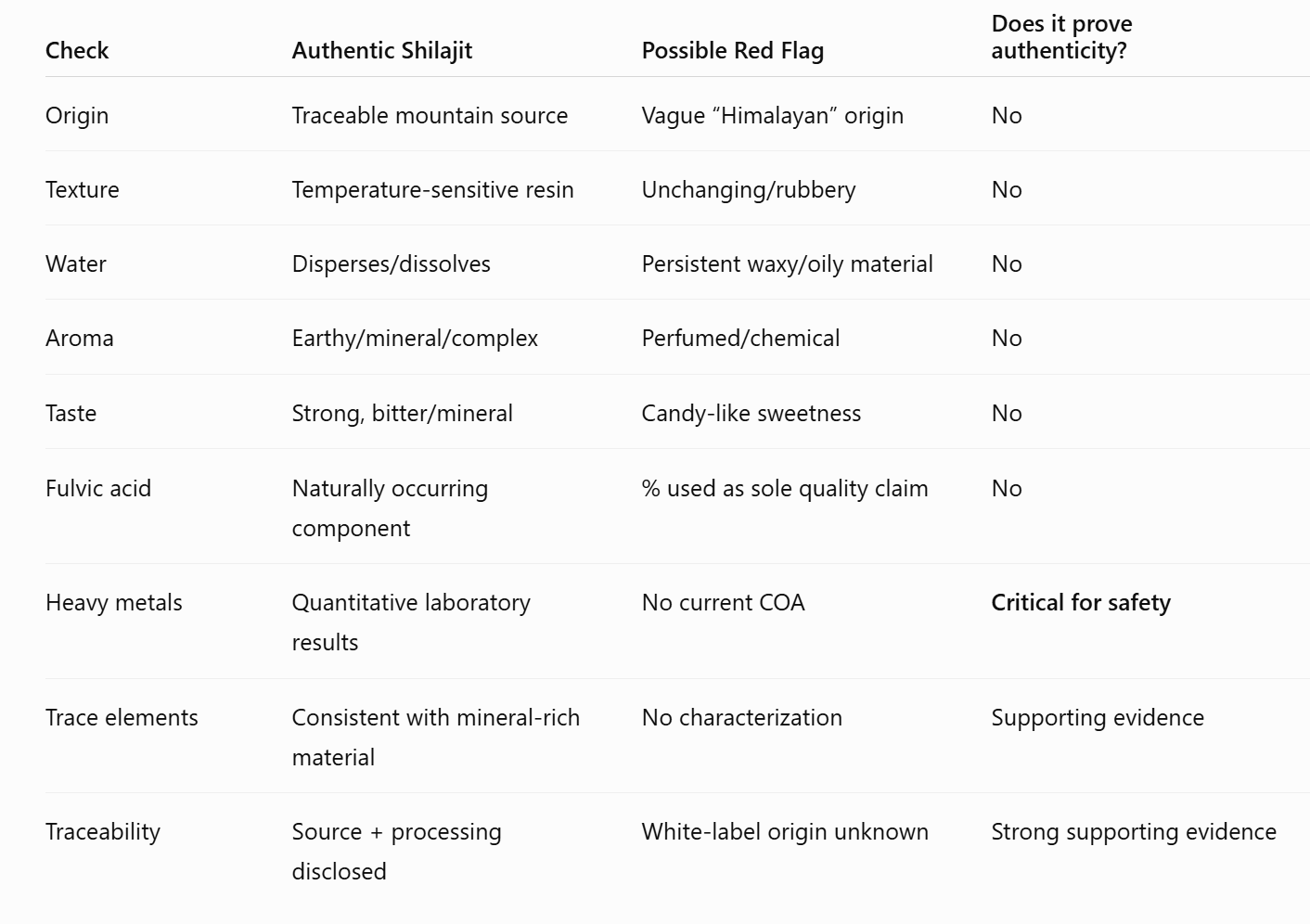
Real vs. fake Shilajit authenticity checklist comparing origin, texture, water solubility, aroma, taste, fulvic acid, heavy metal testing, trace elements, and traceability.
Important: Physical tests are screening tools. They are not substitutes for laboratory analysis.
What Is Real Shilajit?
Shilajit is a naturally occurring substance associated with mountainous regions of Central and South Asia, including the Himalayas, Karakoram, Hindu Kush and surrounding ranges.
Raw Shilajit-like material collected from rock is not the same thing as finished, purified Shilajit resin.
The raw material can contain rock particles, soil, organic debris and other unwanted material. Proper processing and purification are therefore fundamental parts of producing Shilajit intended for consumption.
Authentic Shilajit is also chemically complex.
It contains a mixture of organic compounds, humic substances, naturally occurring fulvic fractions and mineral elements. Reducing Shilajit to one ingredient—especially fulvic acid—oversimplifies what the material actually is.
That distinction becomes important when evaluating products.
1. Check Where the Shilajit Actually Comes From
Before putting Shilajit in water or holding it over a flame, ask a much simpler question:
Where did it come from?
"Himalayan Shilajit" sounds specific.
It isn't.
The Himalayan and neighboring mountain systems cover an enormous geographical area. If a seller repeatedly emphasizes Himalayan sourcing but cannot identify a meaningful source region, you still know very little about the material.
Look for information such as:
Country of origin
Mountain region
Collection area
Harvesting practices
Who processes the raw material
Where purification takes place
At Sulaiman Aftabi, our Shilajit originates in Gilgit-Baltistan, Pakistan, a mountainous region at the convergence of some of the world's great mountain systems.
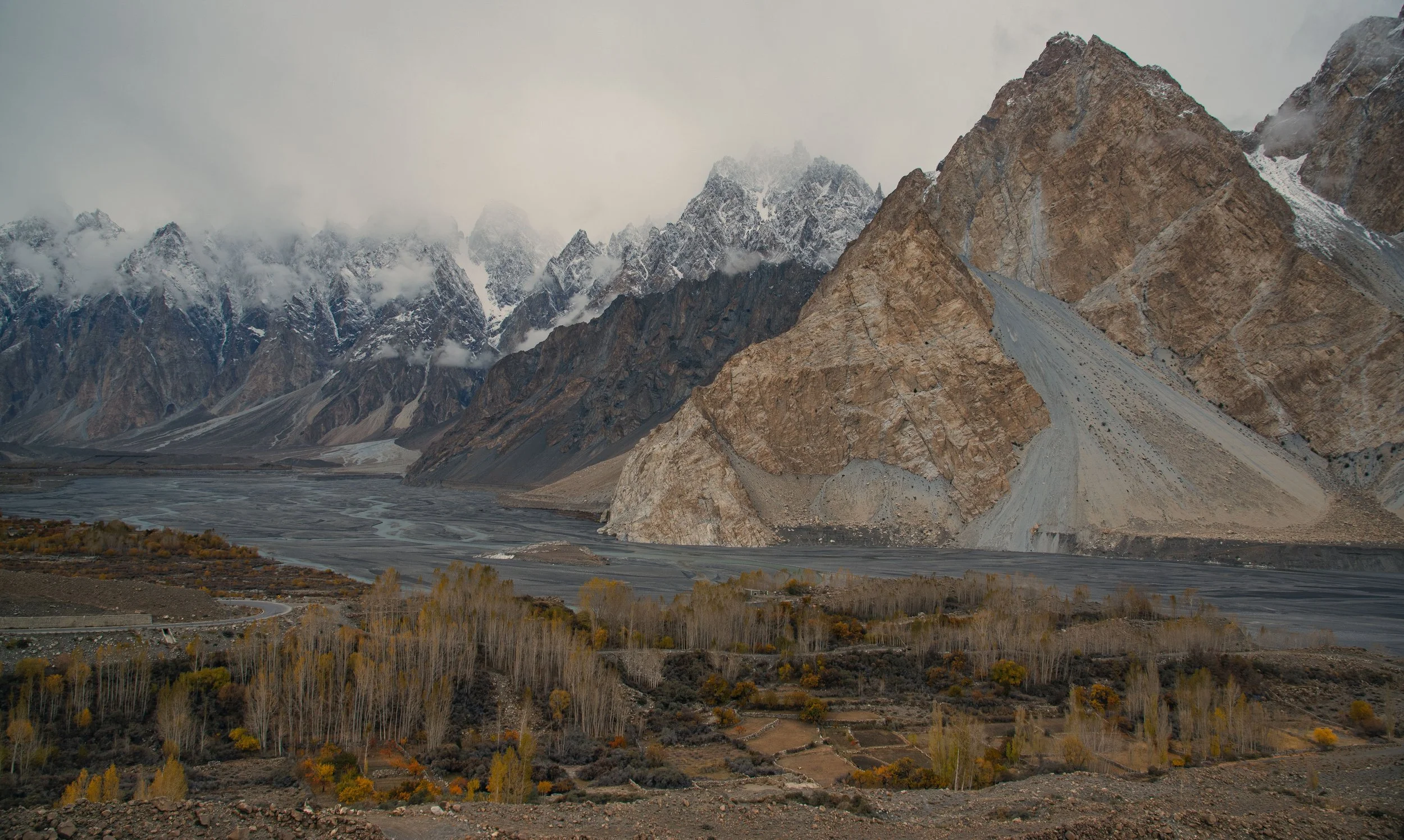
Knowing the source doesn't prove purity by itself.
But traceability is one of the first pieces of authentic himalayan shilajit.
A seller should know where its Shilajit comes from.
2. Look at the Texture — Especially When Temperature Changes
Authentic Shilajit resin typically changes consistency depending on temperature.
When warmer, the resin generally becomes:
Softer
Stickier
More pliable
When exposed to colder temperatures, it generally becomes:
Firmer
Less sticky
Sometimes quite hard
This is why the same jar of Shilajit may feel very different in a warm room than it does during winter.
Does the temperature test prove Shilajit is real?
No.
Other resinous or wax-like substances can also respond to temperature.
Think of temperature sensitivity as a supporting characteristic, not an authentication certificate.
If your resin behaves as expected, that's useful information.
If it doesn't, that's a reason to investigate further.
3. Try the Warm-Water Test
This is probably the most famous Shilajit authenticity test.
Place a small amount of resin into warm water and stir.
Purified Shilajit resin should gradually disperse into the water, producing a brown to dark-brown solution.
What you don't want to see is an obvious waxy or oily layer floating on the surface or substantial gritty material remaining at the bottom.
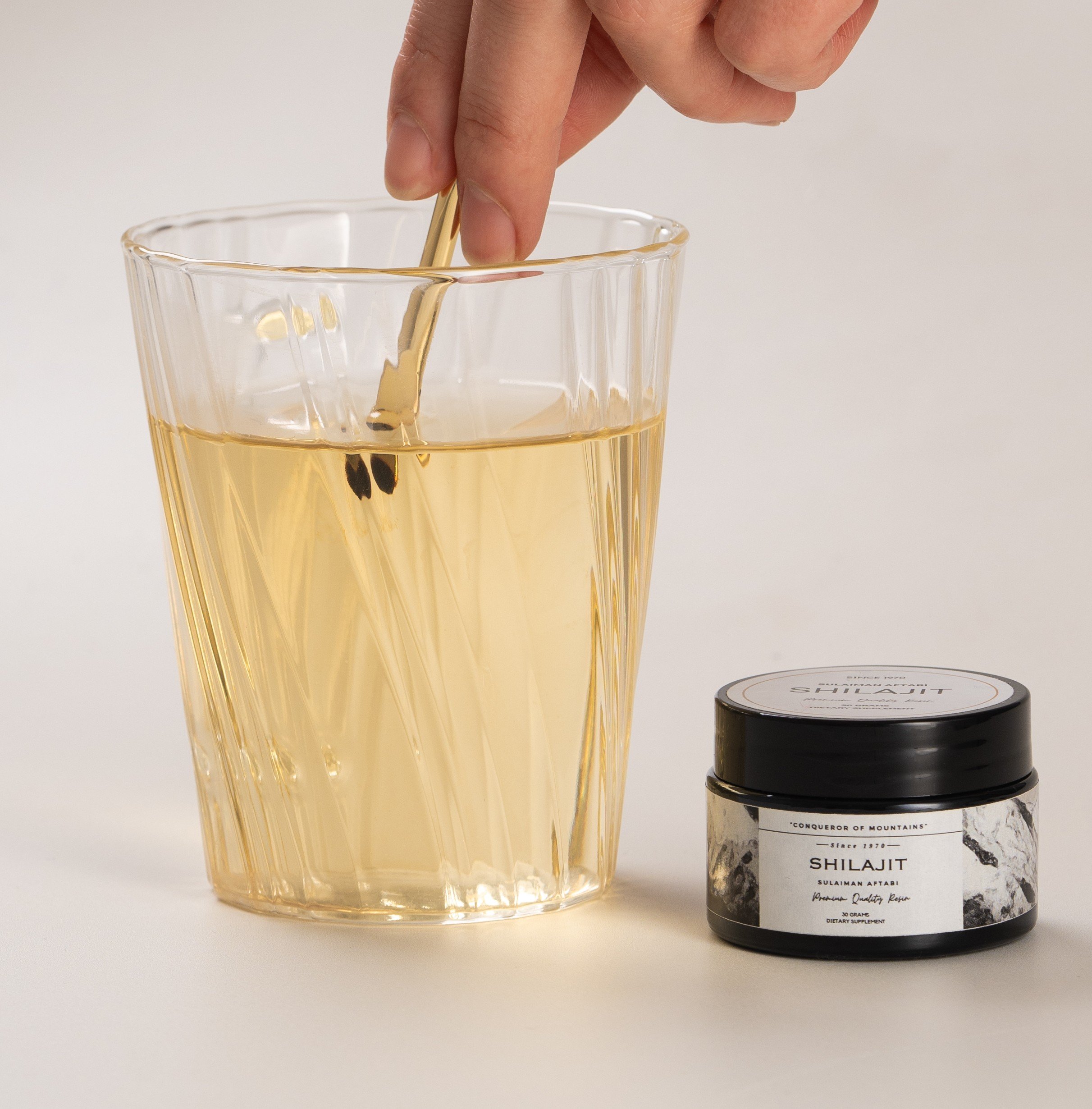
Sulaiman Aftabi Shilajit resin being stirred into warm water to demonstrate the Shilajit water solubility test.
Does the Water Test Prove Shilajit Is Real?
Dissolving in water does not prove something is Shilajit.
There are other water-soluble substances that can produce a dark solution.
The water test is much better at answering:
"Does this material behave unusually?"
than:
"Can I scientifically prove this is authentic Shilajit?"
Those are very different questions.
And water certainly cannot tell you how much lead, arsenic, cadmium, mercury, thallium or other elements are present.
For that, you need laboratory analysis.
4. Pay Attention to the Smell
Shilajit has a distinctive aroma that can be difficult to describe if you've never encountered genuine resin before.
Think:
Earthy. Mineral. Pungent. Complex.
Natural variation is expected. Shilajit is not a synthetic product manufactured to smell identical from batch to batch.
But certain characteristics deserve additional scrutiny.
If your "pure Shilajit resin" smells strongly perfumed, confectionery-sweet or distinctly chemical, ask why.
Smell alone cannot authenticate Shilajit.
But combined with origin, texture, solubility and laboratory testing, it becomes another useful piece of evidence.
5. Taste It — But Don't Expect It to Taste Good
Authentic Shilajit isn't candy.
Its flavor is generally intense, earthy, bitter and mineral-like.
One thing pure resin should not naturally taste like is dessert.
A noticeably sweet product may contain sweeteners or other ingredients, depending on its formulation.
That doesn't automatically make a formulated Shilajit product "fake"—gummies, flavored liquids and other supplements intentionally contain additional ingredients.
But if something is marketed specifically as 100% pure Shilajit resin, unexplained sweetness should raise a question.
Check the ingredient list.
Pure resin should not need sugar, syrup or flavoring to make it more pleasant.
6. Be Careful With the Famous "Flame Test"
Search social media for ways to test Shilajit and you'll eventually see someone holding resin over a lighter.
You'll hear claims such as:
"Real Shilajit never burns."
The problem is that real-world authentication isn't that simple.
Heating a complex natural material can cause it to soften, bubble, char or change depending on factors including moisture and composition.
More importantly, observing what something does near a flame cannot tell you its complete chemical composition.
A flame test cannot quantify:
Lead
Arsenic
Cadmium
Mercury
Thallium
Aluminum
Microorganisms
Fulvic acid
Individual mineral elements
So while heat behavior may provide another physical clue, we would never recommend using a lighter as your primary evidence that a Shilajit product is safe or authentic.
A home test is not a laboratory test.
7. Ask How the Shilajit Was Purified
This may be one of the most overlooked questions in the entire Shilajit industry.
Consumers frequently ask:
"How much fulvic acid does it have?"
A better question to ask first is:
"How was the raw Shilajit purified?"
Shilajit does not emerge from mountain rock conveniently packaged as clean finished resin.
It must be collected and processed.
At Sulaiman Aftabi, the traditional process involves water extraction followed by repeated filtration—typically 15–20 or more filtration cycles—before the purified material is slowly sun-dried.
Depending on climate and season, this drying process can take approximately 45–90 days.
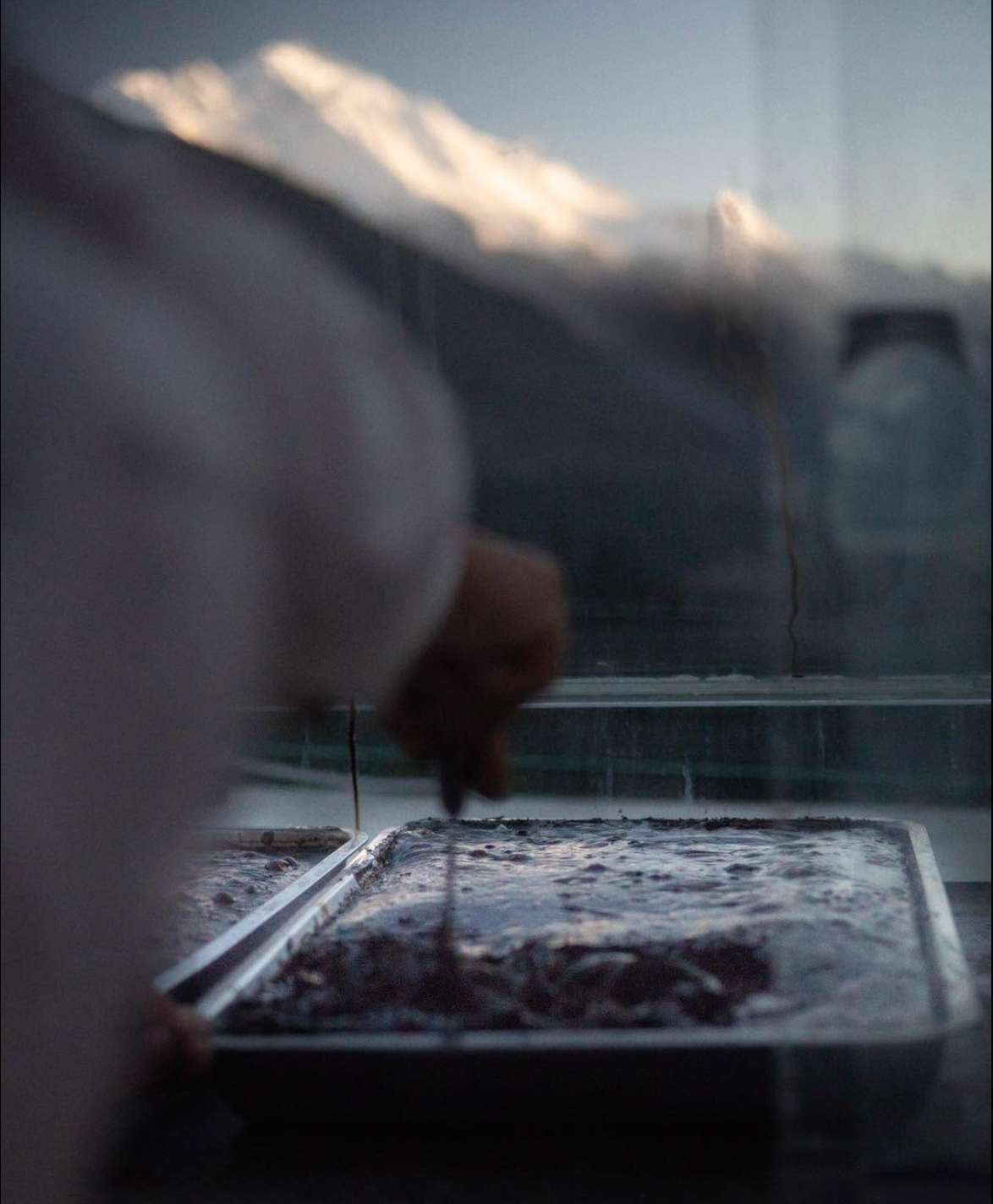
That is very different from taking a generic extract, concentrating one fraction, and marketing the resulting material primarily around an impressive percentage on the label.
When evaluating a brand, ask:
Where is your Shilajit collected?
How is it purified?
How is it dried?
Who performs the processing?
A company selling authentic Shilajit should be able to talk about more than the final jar.
8. Don't Fall for the Fulvic Acid Percentage Trap
This is one of the biggest sources of confusion in today's Shilajit market.
You'll see products advertising:
50% fulvic acid.
70% fulvic acid.
Sometimes even:
80%+ fulvic acid.
The implied message is simple:
More fulvic acid = better Shilajit.
But that conclusion does not automatically follow.
Fulvic substances are an important part of Shilajit's composition, but Shilajit is not simply fulvic acid.
It is a complex natural matrix containing organic material and mineral elements.
This creates an important question when evaluating extremely high fulvic-acid claims:
Are you evaluating whole Shilajit—or a highly concentrated/standardized fulvic-rich extract?
Those are not necessarily the same product.
Test methodology matters too.
A percentage without information about the analytical method used to obtain it provides much less information than consumers may assume.
That's why we don't believe a Shilajit product should be judged by a single percentage.
More isn't automatically better.
If your goal were simply to consume isolated or concentrated fulvic acid, fulvic-acid supplements are already available separately.
The reason people seek authentic Shilajit is precisely because Shilajit is more than one isolated fraction.
So rather than asking only:
"How high is the fulvic acid?"
also ask:
"What else is actually in this material?"
9. Look at the Laboratory Results
This is where the conversation changes from kitchen experiments to measurable evidence.
A responsible Shilajit company should be able to provide meaningful independent laboratory testing.
For elemental safety, modern laboratories can use techniques such as ICP-MS (Inductively Coupled Plasma Mass Spectrometry) to measure elements at very low concentrations.
At minimum, consumers should look for quantitative testing of commonly scrutinized toxic elements such as:
Lead (Pb)
Arsenic (As)
Cadmium (Cd)
Mercury (Hg)
Additional elemental analysis can provide an even broader picture.
But don't stop at seeing a badge that says:
LAB TESTED
Ask to see the numbers.
A useful laboratory report should tell you what was tested, the result, units of measurement and ideally the analytical method and reporting/detection limits.
There is a major difference between:
"Passed heavy metals testing."
and:
"Here are the measured concentrations."
Transparency means showing the evidence behind the claim.
Can You Prove Shilajit Is Real at Home?
Not conclusively.
That's perhaps the most important takeaway from this entire guide.
Home tests can reveal red flags.
They can show whether a resin behaves in ways commonly associated with Shilajit.
But they cannot fully establish identity, composition or safety.
Think of it this way:
Home tests can help you reject suspicious Shilajit.
They cannot certify good Shilajit.
A dark resin dissolving in water isn't a Certificate of Analysis.
And a resin that becomes hard in the refrigerator isn't proof that it was responsibly sourced, properly purified or tested for unwanted elements.
The Better Shilajit Authenticity Checklist
Before buying Shilajit, ask these questions:
1. Can the company tell you the actual source region?
Not merely "the Himalayas."
2. Does the company explain how its Shilajit is purified?
Look for actual processing information rather than vague references to "ancient methods."
3. Is the product really resin?
Check whether additional ingredients, extracts, sweeteners or fillers are present.
4. Does the resin respond naturally to temperature?
It should generally soften with warmth and become firmer in the cold.
5. Does it disperse in warm water without obvious waxy residue or grit?
Useful—but not definitive.
6. Does it smell and taste consistent with an earthy, mineral-rich natural resin?
Again, supporting evidence rather than proof.
7. Does the company provide actual laboratory data?
Don't settle for a "lab tested" logo.
8. Are heavy-metal results quantitative?
Look for actual values and units.
9. Is fulvic acid being presented in context?
Be skeptical when an enormous percentage is treated as the sole measure of quality.
10. Can the company answer questions about its own supply chain?
A company should know the material it sells.
Real Shilajit vs. "Fulvic Acid in a Jar"
As Shilajit has become more popular, the conversation around it has increasingly focused on one number: fulvic acid percentage.
We believe that's the wrong way to understand this natural material.
Imagine judging extra-virgin olive oil solely by the concentration of one compound.
Or judging coffee entirely by caffeine percentage.
A naturally complex product is more than one constituent.
The same principle applies to Shilajit.
Authentic Shilajit should be evaluated as a whole natural material—its origin, processing, physical characteristics, composition and safety—not simply by whichever number looks best on a product page.
What We Look for at Sulaiman Aftabi
Sulaiman Aftabi's approach to Shilajit is based on a simple idea:
Preserve the character of authentic, mineral-rich Shilajit rather than chasing an artificially impressive single number.
Our Shilajit is sourced from Gilgit-Baltistan, Pakistan, traditionally purified through repeated water extraction and filtration, and slowly sun-dried into resin.
The knowledge behind the process goes back more than five decades.
Modern laboratory testing is then used alongside that traditional production knowledge to evaluate the finished material.
Because tradition and science don't have to compete.
Tradition tells us how to make Shilajit.
Testing helps us verify what is actually in it.
Frequently Asked Questions About Real and Fake Shilajit
How can you tell if Shilajit is real?
Start by checking its source, ingredients, processing method and laboratory documentation. Authentic resin also commonly softens when warm, firms when cold and disperses in warm water. However, no single home test can conclusively prove authenticity.
What does real Shilajit look like?
Purified Shilajit resin is generally dark brown to nearly black and has a thick, sticky resin-like appearance. Its consistency can change considerably depending on temperature.
Does real Shilajit dissolve in water?
Purified Shilajit resin should disperse/dissolve in warm water, typically producing a brown to dark-brown solution. However, water solubility alone does not prove authenticity because other soluble materials can behave similarly.
Does real Shilajit get hard in the cold?
Shilajit resin generally becomes firmer as temperature falls and softer as temperature rises. The degree of hardness can vary with composition, moisture and temperature.
Does real Shilajit burn?
The popular flame test is not a definitive authenticity test. Heating can provide information about physical behavior, but it cannot establish composition, purity or heavy-metal safety.
What should real Shilajit taste like?
Authentic unflavored resin typically has an intense earthy, bitter and mineral-like taste. A distinctly sweet taste in something sold as pure resin deserves further investigation.
Is high fulvic acid proof of good Shilajit?
No. Fulvic substances are part of Shilajit's composition, but a high reported fulvic-acid percentage by itself does not prove authenticity, purity or overall quality. The analytical method and the nature of the product being tested also matter.
What is the best way to check Shilajit purity?
Look at multiple forms of evidence together: traceable origin, disclosed processing, physical characteristics and independent quantitative laboratory analysis. Home tests can reveal red flags but cannot replace laboratory testing.
How do I avoid fake Shilajit?
Avoid relying on marketing phrases such as "100% pure," "premium Himalayan" or "highest fulvic acid." Look for a specific source, transparent processing information, independent laboratory results, clear ingredients and a company that can answer detailed questions about its product.
The Bottom Line
If you're trying to determine whether Shilajit is real, don't rely on one trick.
The water test isn't enough.
The cold test isn't enough.
The flame test isn't enough.
And an enormous fulvic-acid percentage isn't enough.
Look at the entire chain:
Where did it come from?
Who processed it?
How was it purified?
How does the resin behave?
What does independent laboratory testing actually show?
The closer you get to the source—and the more evidence a company is willing to provide—the less you have to rely on marketing.
That's how we believe Shilajit should be judged.
Not by one claim. By the evidence.