Authentic Himalayan Shilajit Resin
Sun-Dried & Lab Tested
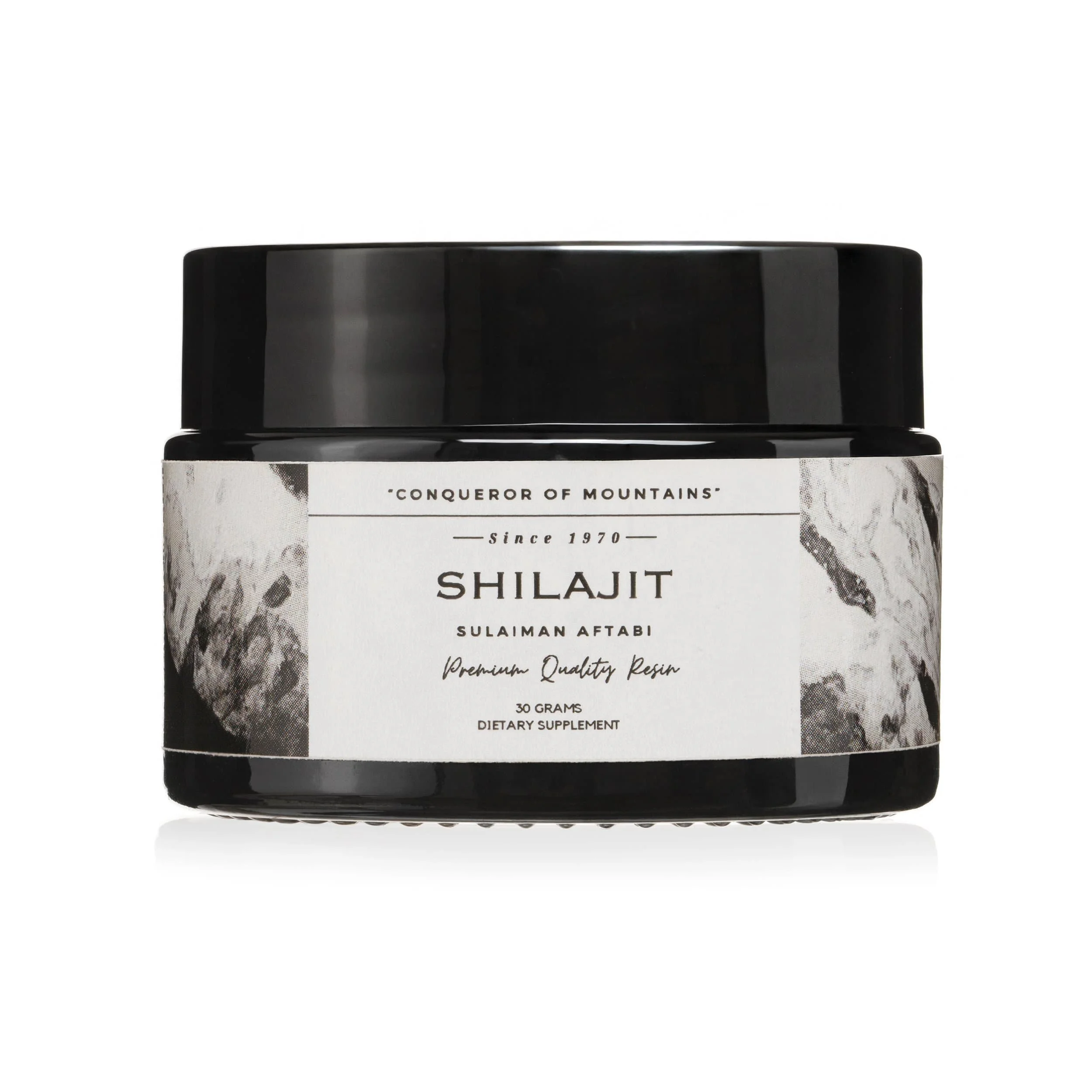
Traditionally purified Himalayan Shilajit resin from Gilgit-Baltistan. Sun-dried for 45–90 days and independently tested for heavy metals in U.S. laboratories.
Gilgit-Baltistan · Since 1970 · 15–20+ Filtration Cycles · 45–90 Day Sun-Dried · Independent U.S. Lab Testing
SHOP
Filters
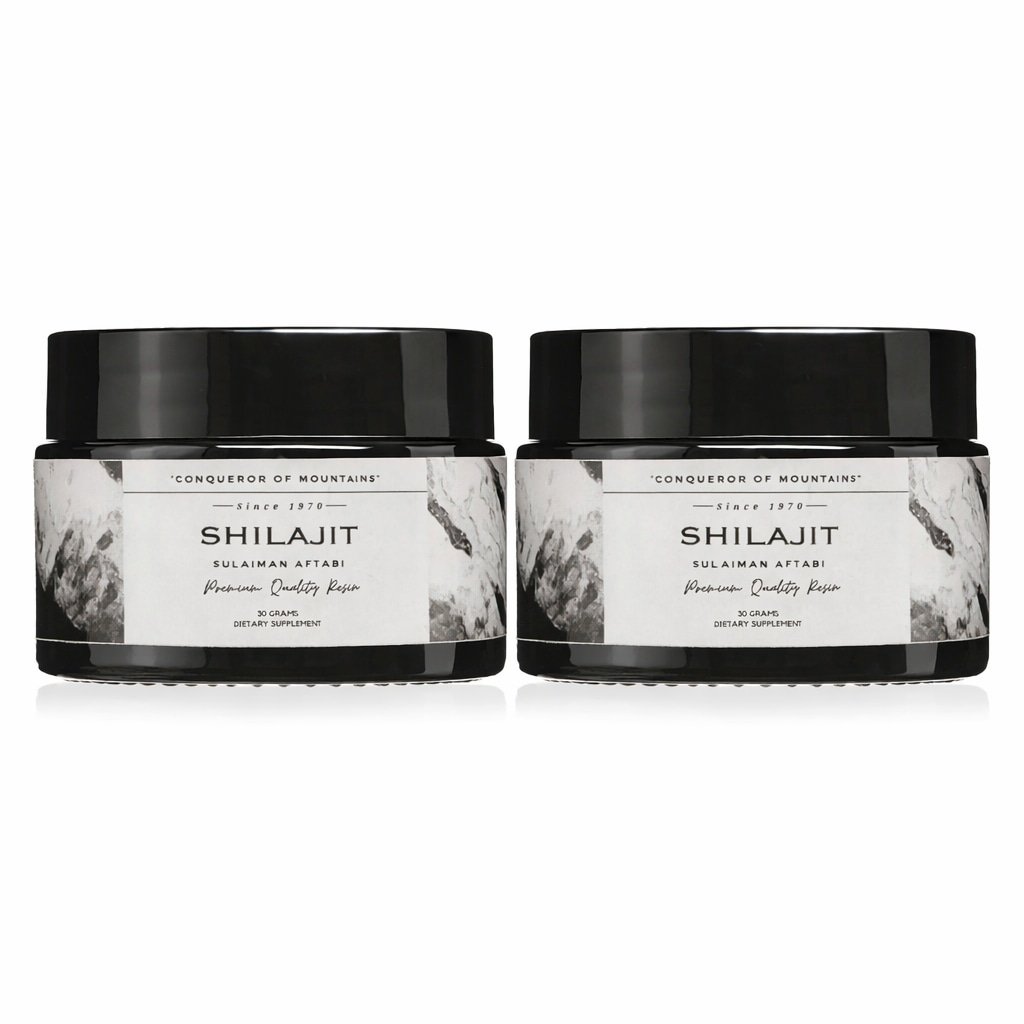

Why Sulaiman Aftabi Shilajit Is Different
-
Traceable Gilgit-Baltistan Origin
Our Shilajit comes from the mountainous Gilgit-Baltistan region of Pakistan, where we have produced Shilajit since 1970.
-
Traditional Purification
Water extraction followed by repeated filtration, typically 15–20+ cycles.
Learn about our process → -
Slow Sun-Drying
Our purified Shilajit is gradually concentrated and sun-dried for approximately 45–90 days depending on season and climate.
-
Independent Laboratory Testing
Finished resin is independently tested for key heavy metals, including lead, arsenic, cadmium and mercury.
View lab results →
Research Shilajit before you buy
How to Tell If Shilajit Is Real →
9 checks for evaluating authentic vs. fake Shilajit.
What Makes the Best Shilajit? →
Origin, resin, purification, fulvic acid and lab testing.
How to Choose the Right Shilajit →
A practical buyer's guide.
FAQs
-
When comparing Shilajit, look beyond words such as “pure,” “premium,” and “high fulvic acid.” A high-quality Shilajit should have a traceable geographic origin, a transparent purification process, a clear ingredient list, independent laboratory testing, and a producer that can explain how the raw material becomes the finished product.
Sulaiman Aftabi Shilajit comes from Gilgit-Baltistan, Pakistan, is traditionally water-extracted and repeatedly filtered, slowly sun-dried into pure resin, and independently tested for key heavy metals.
For a deeper comparison, read our guide to Choosing the best Shilajit.
-
Authentic Himalayan Shilajit is best purchased from a producer that clearly identifies where the Shilajit comes from, how it is purified, what ingredients are present and what independent laboratory testing shows.
Sulaiman Aftabi produces authentic Himalayan Shilajit resin sourced from Gilgit-Baltistan, Pakistan. You can purchase our 30 g and 60 g resin directly through this official Sulaiman Aftabi website and review our sourcing, purification process and laboratory testing before you buy.
-
No single home test can prove that Shilajit is authentic or safe. Texture, temperature sensitivity, smell, taste and how resin behaves in warm water can provide useful clues, but they cannot verify geographic origin, identify every ingredient or measure heavy metals.
A stronger authenticity check looks at the complete chain: source → traceability → purification → ingredient transparency → physical characteristics → independent laboratory testing.
See our complete guide to 9 ways to tell if Shilajit is real.
-
Item descriptionOur Shilajit comes from Gilgit-Baltistan in northern Pakistan, a high-mountain region associated with the Himalaya, Karakoram and Hindu Kush mountain systems.
We have produced Shilajit from this region since 1970. We value Gilgit-Baltistan not simply because of the name “Himalayan,” but because of its extraordinary geology, mineral-rich mountain environment and, most importantly, our long experience sourcing and producing Shilajit from this specific region.
Geographic origin is an important part of evaluating Shilajit, but we believe it should always be considered together with purification, traceability and finished-product laboratory testing.
-
Yes. Our Shilajit undergoes independent laboratory testing for lead, arsenic, cadmium, mercury, thallium and aluminum. In 2026, we expanded our elemental testing beyond the standard four-metal panel to include thallium (Tl) and aluminum (Al) for greater transparency.
Our latest tested batch measured 0.009 ppm thallium and 0.025 ppm aluminum, in addition to our existing heavy-metal testing. Results are batch-specific.
View our independent Shilajit lab testing and results → Lab Reports
-
Not necessarily.
Fulvic acid is one naturally occurring component of Shilajit, but Shilajit is a chemically complex natural material rather than isolated fulvic acid. A percentage also needs context: the analytical method and whether the sample is whole purified resin or a concentrated/standardized extract can materially affect the result.
For this reason, we do not believe consumers should choose Shilajit simply by finding the largest fulvic acid number. Consider origin, processing, complete composition and safety testing alongside any fulvic acid result.
Sulaiman Aftabi does not add isolated or synthetic fulvic acid to increase the percentage of our resin.
-
Different forms suit different consumers, and a capsule or powder is not automatically fake or inferior simply because of its format.
We produce pure Shilajit resin because it keeps the product close to the traditionally purified form without needing to convert it into a powder, capsule or gummy. Other formats require additional manufacturing and, depending on the product, may also contain capsule materials, carriers, sweeteners, flavors or other ingredients.
If your priority is a single-ingredient, minimally transformed Shilajit, resin is the form we recommend. Sulaiman Aftabi Shilajit contains no fillers, flavors, sweeteners or preservatives.
-
Our process begins with raw Shilajit material from Gilgit-Baltistan. We use traditional water extraction followed by repeated filtration—typically 15–20+ filtration cycles—to separate the desired soluble material from unwanted physical debris.
After purification, the material is gradually concentrated and sun-dried into the resin we package and sell.
We have used and refined this approach through more than five decades of Shilajit production. You can see more about our traditional Shilajit process here.
-
After purification, our Shilajit is slowly concentrated and sun-dried rather than rushed through the final production stage. Depending on the season and climate, this process typically takes approximately 45–90 days.
We continue to sun-dry because it is part of the traditional production method Sulaiman Aftabi has used for generations. Other legitimate processing methods exist; sun-drying alone does not prove authenticity.
What matters to us is being transparent about exactly how our raw material becomes finished Shilajit resin.
-
Authentic Shilajit resin should disperse and dissolve readily in warm water, producing a dark brown solution. However, the water test is only a screening clue—not proof of authenticity or safety.
Small amounts of natural insoluble material can remain for a little longer before dissolving (especially in sun-dried shilajit where the top layer gets crisper in the sun and takes longer to dissolve) .
A water test cannot identify heavy metals, verify geographic origin or prove that a product contains only genuine Shilajit.
If you're evaluating authenticity, use the water test together with source traceability, ingredient transparency, purification information and independent laboratory testing.
-
Producing authentic Shilajit resin involves much more than putting a dark material into a jar. Costs can include remote sourcing, careful purification, repeated filtration, slow drying, laboratory analysis, packaging and quality control.
At Sulaiman Aftabi, our resin goes through typically 15–20+ filtration cycles, followed by approximately 45–90 days of sun-drying and independent laboratory testing.
Price alone never proves authenticity—an expensive product can still be poor quality. But when comparing premium Shilajit, look at what the price actually pays for and what evidence the producer provides.
-
If you're new to Shilajit, we recommend starting with approximately 150–200 mg daily for the first few days and then gradually increasing as desired. A typical daily serving of Sulaiman Aftabi Shilajit is around 500 mg.
Individual needs vary. Follow the directions on your product and speak with a qualified healthcare professional if you are pregnant or nursing, take medication, have a medical condition or have questions about whether Shilajit is appropriate for you.
-
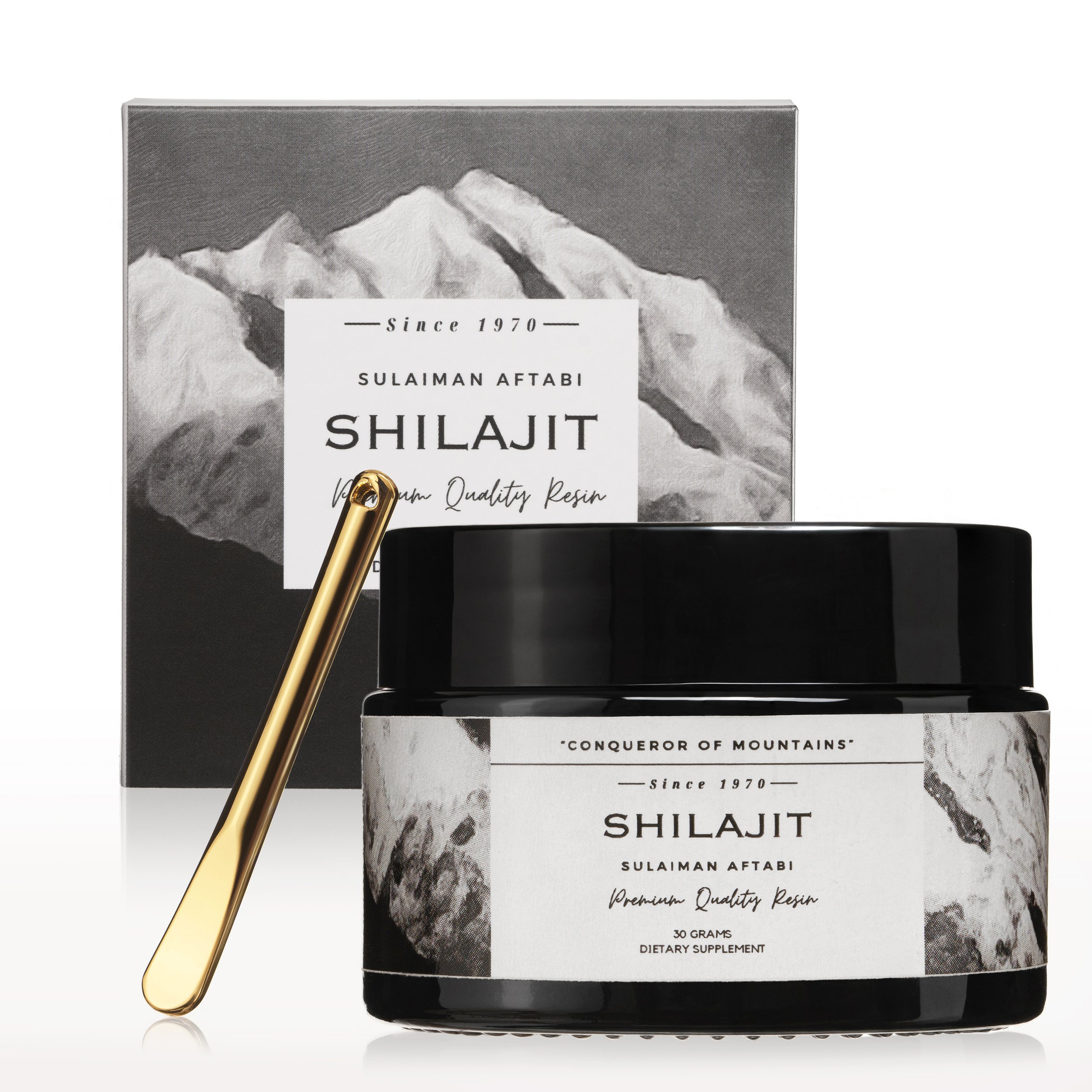
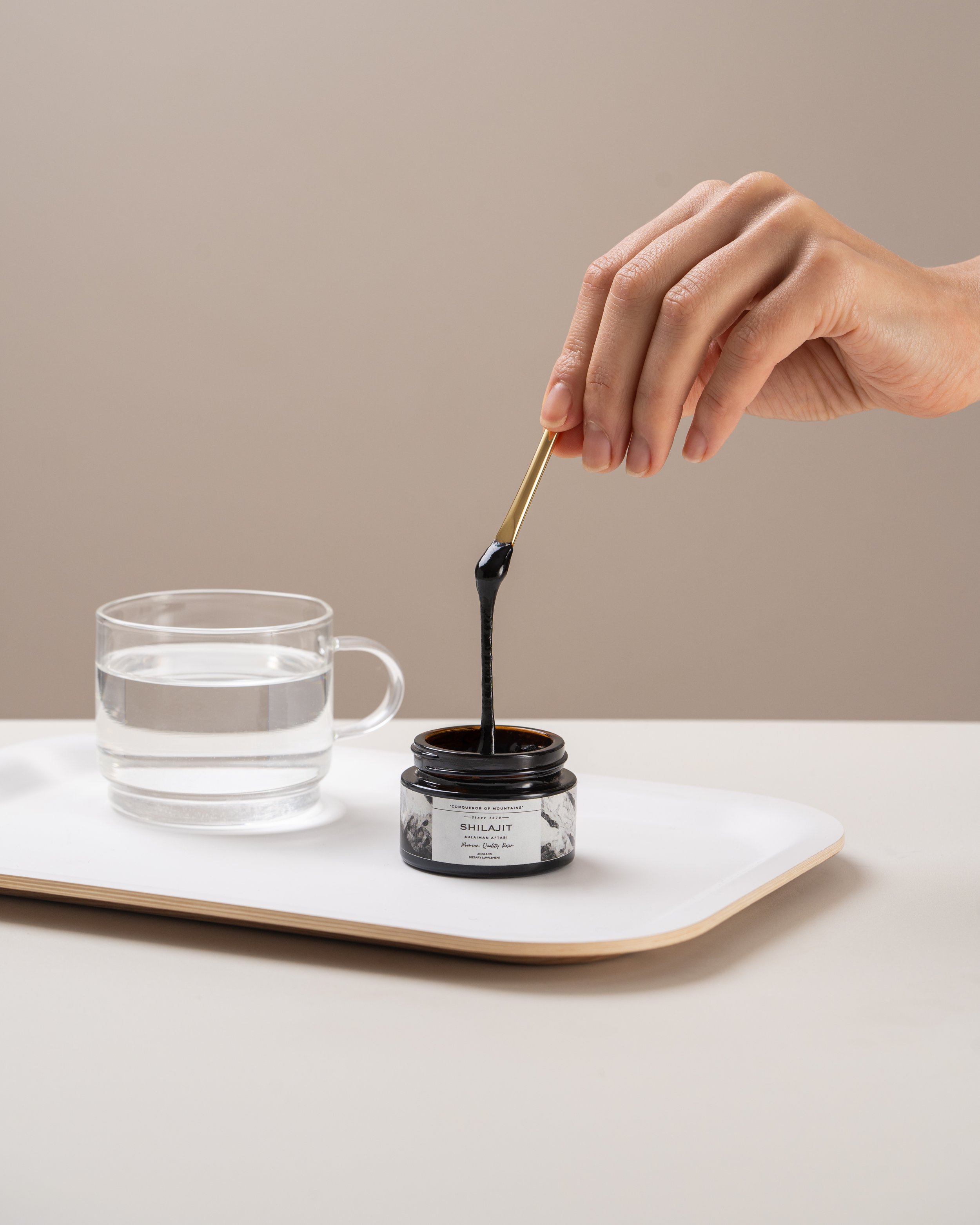
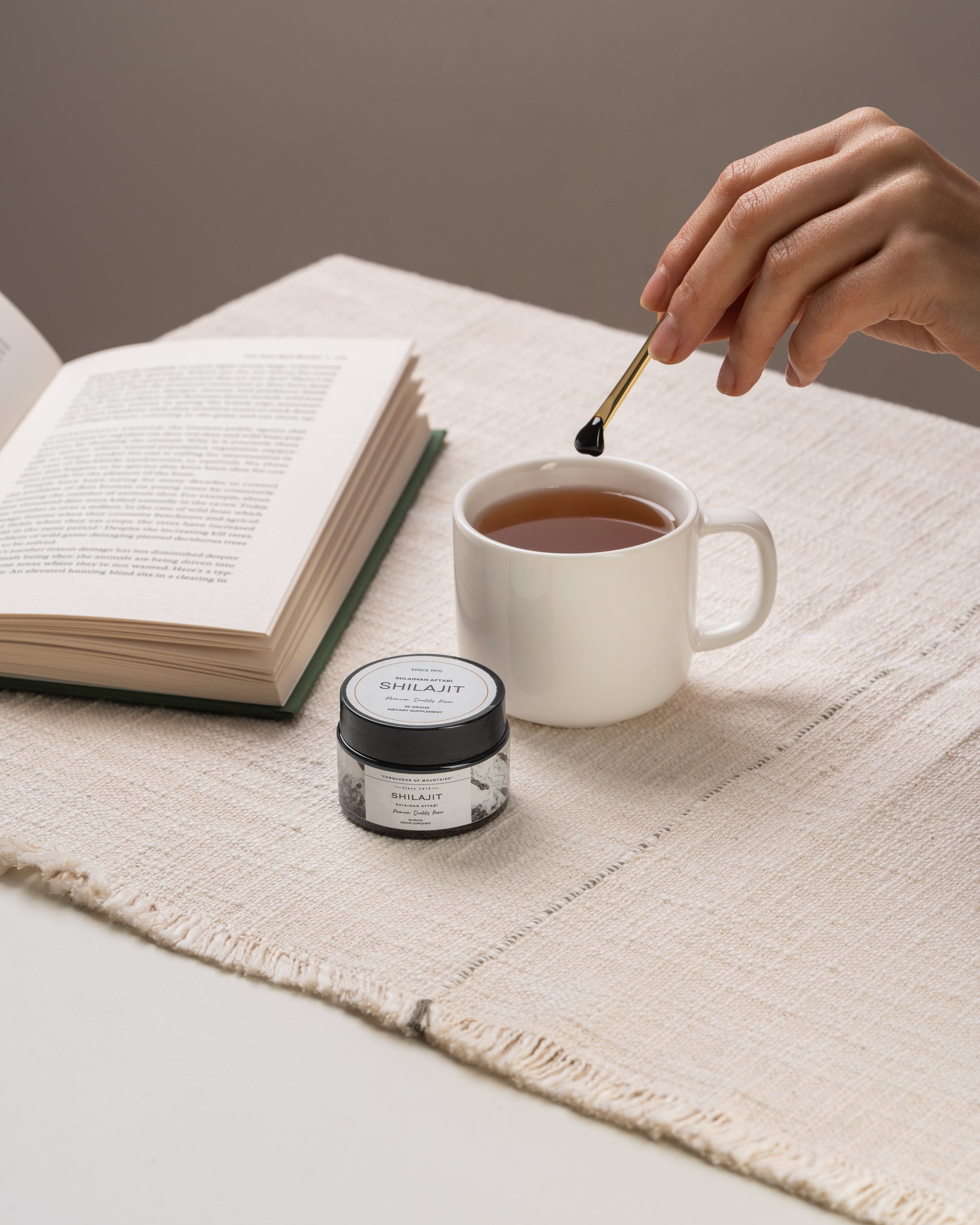
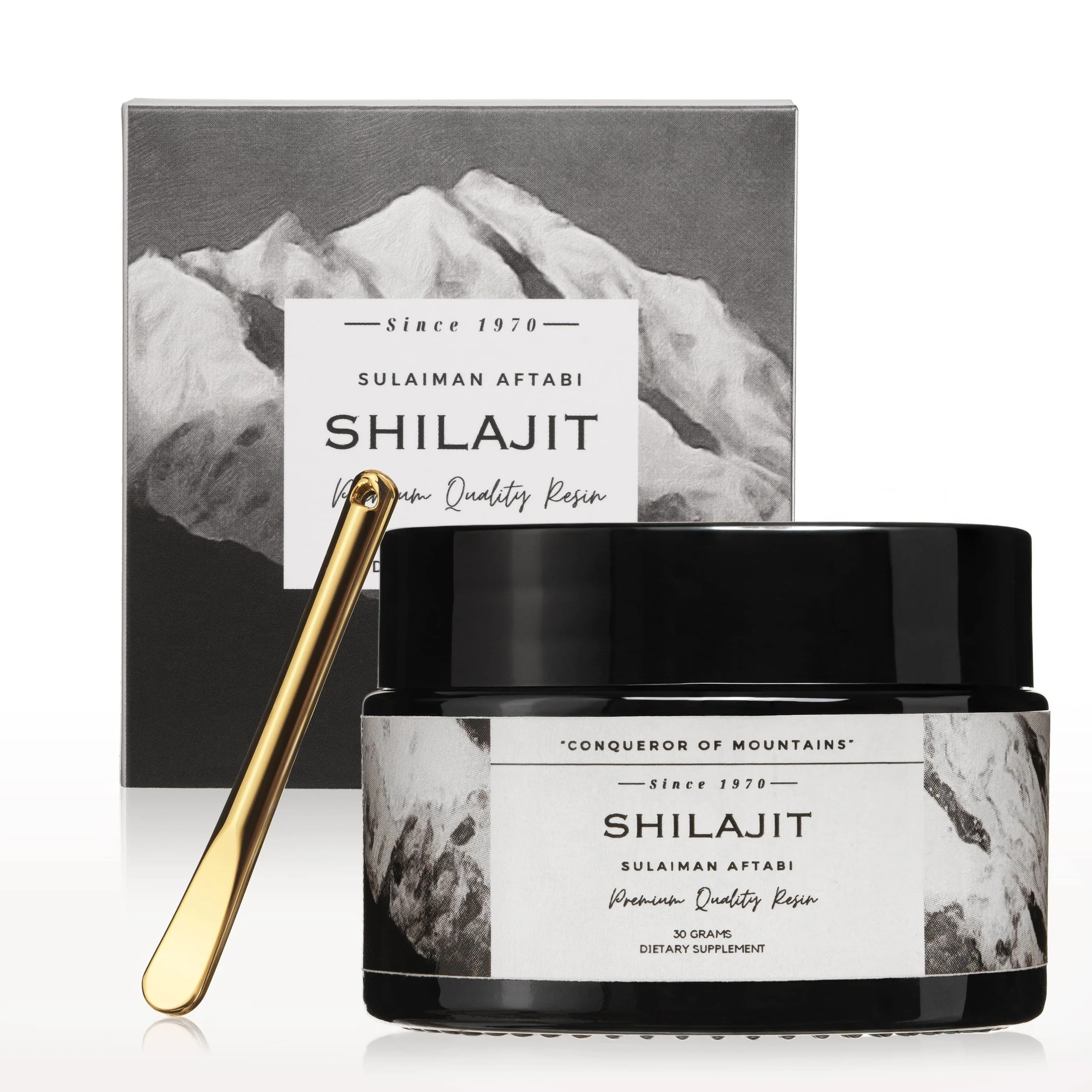
Scoop the desired amount of resin with the spoon provided and dissolve it in warm water, milk, tea or another warm beverage.
Avoid adding Shilajit to boiling liquid. Warm liquid is sufficient to soften and disperse the resin.
Shilajit naturally has a strong, earthy and mineral taste, so milk, tea or another flavored warm drink can make it easier to take if you find the flavor intense.
-
A 30 g jar provides approximately a two-month supply when using around 500 mg per day.
Because resin allows the serving amount to be adjusted, the actual number of servings will depend on how much you choose to take each day.
-
The texture of Shilajit resin naturally changes with temperature. It generally becomes firmer in cooler conditions and softer or stickier as it warms.
Temperature sensitivity can be a useful characteristic of resin, but it should not be treated as a definitive authenticity test.
If your Sulaiman Aftabi resin becomes firm, you can add 5–10 drops of water and leave it overnight to restore a softer consistency.
-
Our resin-form Shilajit has a shelf life of 2+ years when stored properly. Keep it in a cool, dry place away from direct sunlight and moisture. It does not require refrigeration. Always close the lid tightly after each use to maintain freshness.
-
Keep your Shilajit tightly closed in a cool, dry place away from excessive heat, direct sunlight and moisture. Refrigeration is not required.
The resin may become firmer or softer as room temperature changes; this is normal and does not mean the product has spoiled.
-
We heard you — and we’ve upgraded! To provide a better experience, we’ve now moved to expedited international shipping for most destinations.
Here are the current estimated delivery times:
North America & Europe: 3–7 business days
Middle East & Asia: 3–7 business days
Australia & New Zealand: 7–12 business days
Other regions: 8–14 business days
You'll receive a tracking number as soon as your order ships.
Please note: These are estimated delivery windows. Customs processing in your country may occasionally cause delays that are beyond our control.
-
Our Shilajit comes from the high-altitude mountains of Gilgit-Baltistan and is traditionally purified and sun-dried into its natural resin form. We do not add synthetic fulvic acid, fillers or unnecessary additives. We also use independent laboratory testing to examine elemental purity and composition.
Learn how to tell if Shilajit is real → View Article